
Introduction
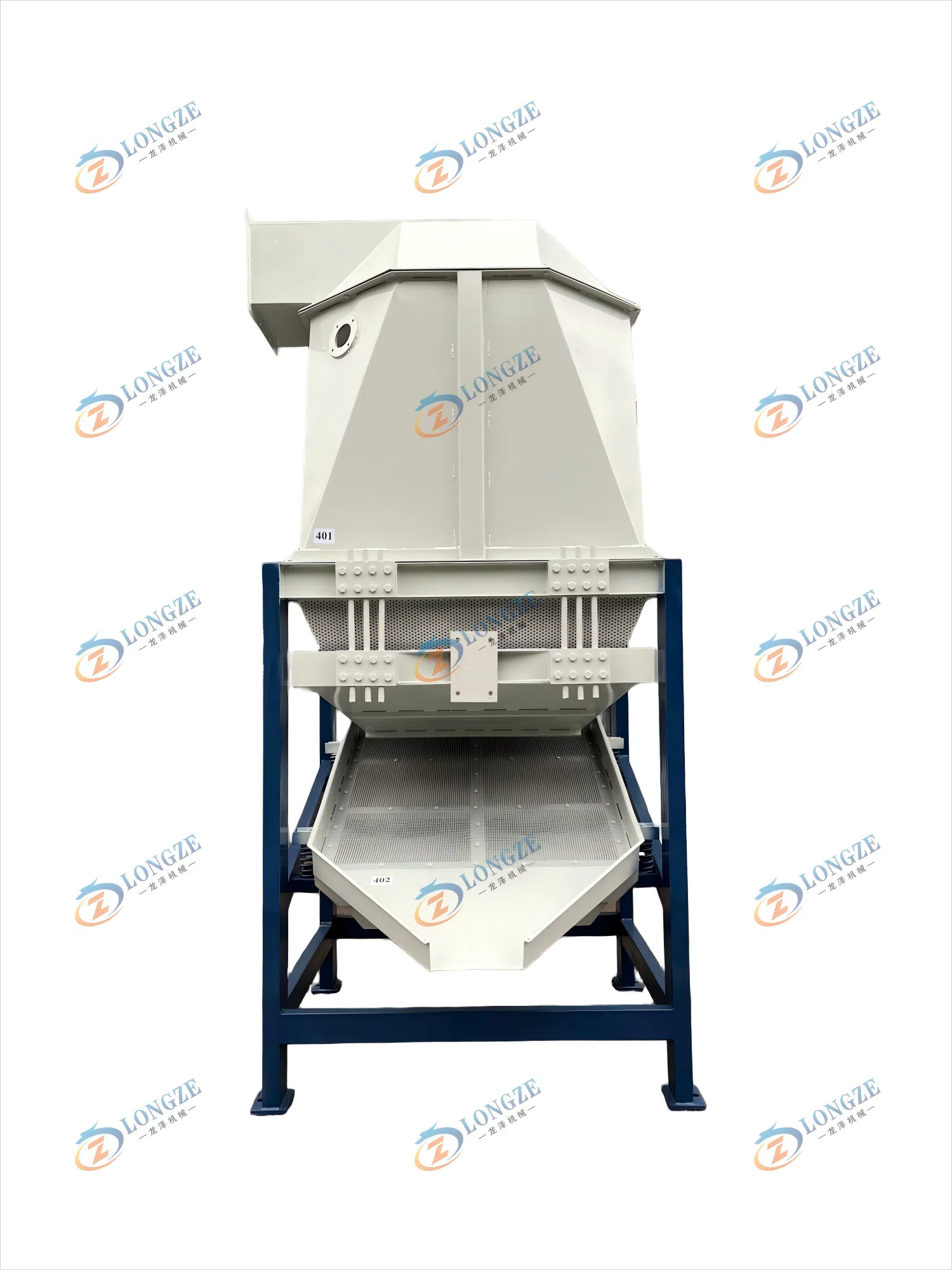
The counterflow pellet cooler operates on the proven countercurrent heat exchange principle, which is universally recognized as the most efficient method for pellet cooling in modern biomass and feed processing industries. Hot pellets discharged from the pellet mill at 60–85°C enter the cooling chamber from the top inlet and descend slowly by gravity, while fresh ambient air is drawn upward through the pellet bed from the bottom air plenum.
This opposite flow arrangement creates a gradual temperature gradient along the material bed: the hottest pellets at the top first encounter warm, partially heated air, and pellets near the bottom meet the coldest incoming air. This design completely avoids thermal shock caused by direct contact between frigid air and hot pellet surfaces, which commonly leads to surface cracking, crazing and internal structural damage in conventional cross-flow coolers.
With optimized airflow velocity and pellet residence time, the counterflow structure achieves maximum heat and moisture transfer efficiency, lowering final pellet temperature to only 3–5°C above ambient temperature while reducing moisture content by no less than 3.5%. Under standard operating conditions, the pellet breakage rate remains below 0.2%, ensuring high product integrity throughout the cooling process.
Advantages
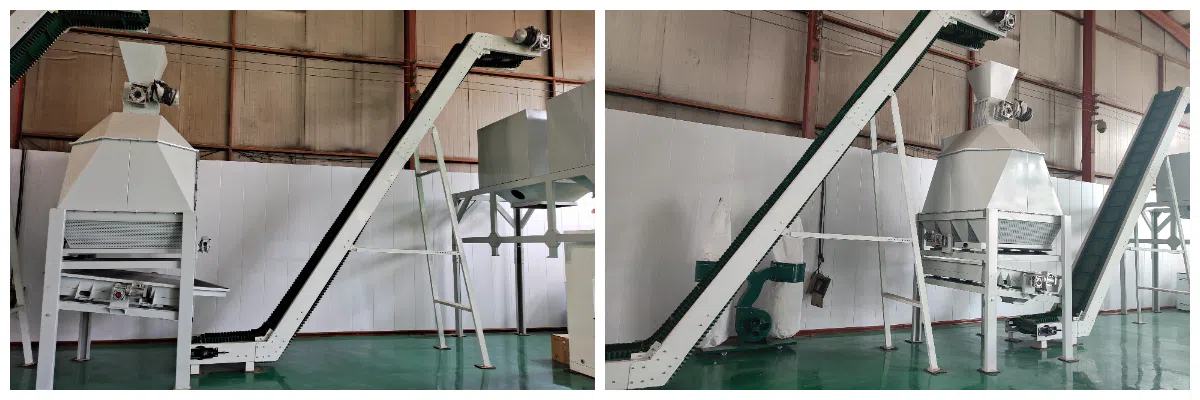
The most prominent advantage of a counterflow pellet cooler lies in its industry-leading heat exchange efficiency, which fundamentally outperforms traditional cross-flow or concurrent cooling systems. Hot pellets discharged from the pellet press at 60–85°C flow downward by gravity, while fresh ambient air is pulled upward through the pellet bed from the bottom plenum, creating a reverse-flow thermal gradient.
This design eliminates thermal shock that causes surface cracking and internal structural damage when hot pellets meet cold air directly, and achieves maximum heat and moisture transfer at every layer of the material bed. Under optimized working conditions, the final pellet temperature drops to only 3–5°C above ambient temperature, while surface moisture content is reduced by 3–5 percentage points.
For biomass fuel pellets, this efficient cooling solidifies lignin binding inside pellets and increases surface hardness; for animal feed pellets, it promotes complete starch gelatinization and improves water stability. This consistently high cooling quality directly elevates finished product grade, reduces defective rates, and strengthens product competitiveness in both domestic and export markets.
Application Scenarios
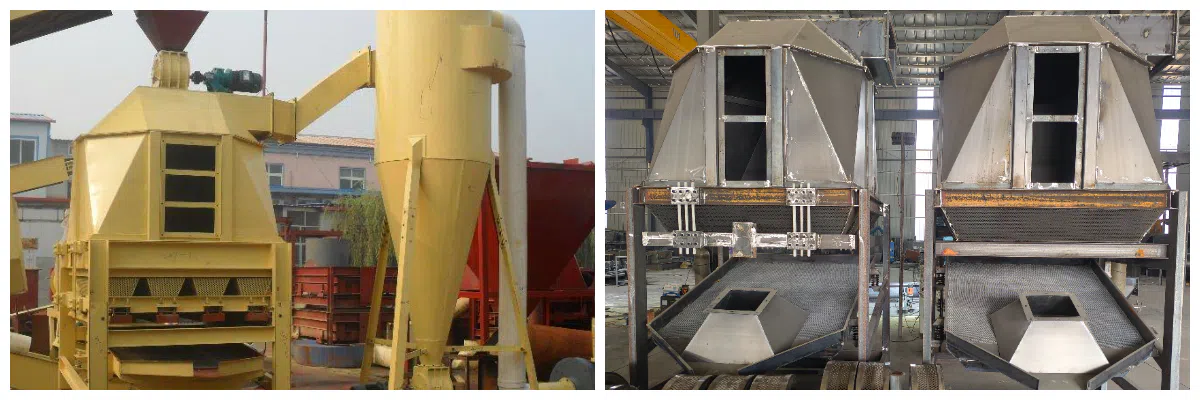
Modern commercial wood pellet production facilities that manufacture ENplus-certified wood fuel pellets for residential heating and industrial power generation rely heavily on counterflow pellet coolers as a mandatory post-pelleting processing unit. Freshly pressed wood pellets exit the ring die pellet mill at temperatures between 70°C and 85°C, with surface moisture of 8–12% and a soft, unconsolidated internal lignin structure.
If transferred directly to storage or packaging, these hot pellets would suffer from surface condensation, internal cracking, spontaneous heating and even mold growth during bulk storage, which would downgrade product quality and violate international fuel pellet standards. The counterflow pellet cooler is installed immediately downstream of the pellet press to gently lower pellet temperature to within 3–5°C of ambient temperature and reduce surface moisture to below 6%, while allowing lignin within the wood matrix to fully solidify and bind wood particles together.
This cooling process increases pellet hardness by 30–40%, lowers breakage rate during transport and handling, and ensures long-term storage stability. For large-scale plants producing 10–20 tons per hour, industrial-grade coolers with automatic level control maintain continuous, uninterrupted operation, matching the output of multiple pellet press lines and delivering consistent, uniform product quality that meets strict European and North American fuel pellet specifications.
YouTube Video Link


