
Introduction
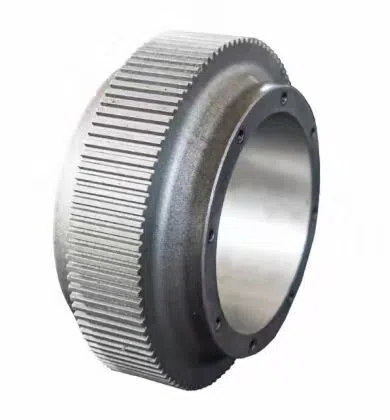
The ring die is the core forming component of a vertical ring die pellet mill, responsible for shaping conditioned raw materials into uniform cylindrical pellets with consistent density, hardness and dimensional accuracy. As a thick-walled perforated cylindrical steel ring, it works in coordination with internal press rollers: as the die rotates or rollers revolve inside the die bore, the rollers compress feedstock against the inner die surface, forcing material through hundreds of precision-drilled radial die holes, where it undergoes plastic deformation and frictional heating before being extruded as continuous strands and cut to length by external cutters. The geometry of the die holes — including diameter, effective length, inlet chamfer and compression ratio — directly determines pellet quality, production throughput and energy consumption of the entire pelletizing system.
Manufactured from premium forged alloy steels such as X46Cr13, 20CrMnTi and GCr15, ring dies undergo vacuum quenching, tempering and precision CNC gun drilling to achieve uniform hardness of HRC 56–62 across the working surface and smooth internal hole walls with minimal friction. Compression ratios are fully customizable according to material properties: 1:4–1:8 for poultry and livestock feed, 1:16–1:28 for aquafeed, and 1:4–1:8 for wood and agricultural biomass pellets, with hole diameters ranging from 1.0 mm for fine shrimp feed up to 12 mm for large biomass fuel pellets. Advanced die designs such as stepped holes and conical inlets further reduce extrusion resistance, improve pellet surface finish and extend service life. With proper operation and maintenance, a high-quality forged ring die delivers 1,000–2,000 hours of continuous production, serving as the most critical wear part that defines the performance ceiling of the pellet mill.
Advantages
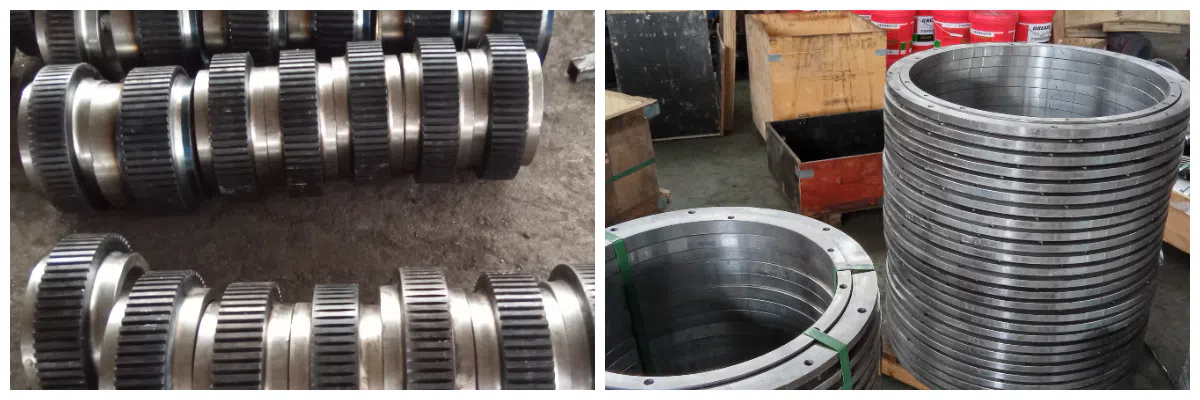
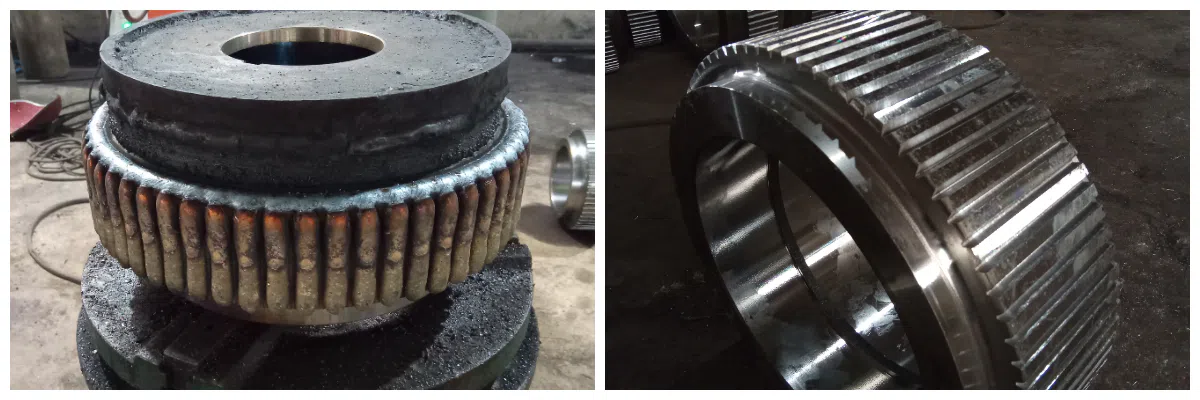
As the core forming component of vertical ring die pellet mills, a high-quality ring die delivers decisive advantages in production efficiency, pellet quality consistency and long-term operating economy that directly determine the overall performance of the entire pelleting system. Unlike flat die designs that suffer from uneven pressure distribution across the working surface, the vertical ring die features a full 360° circular forming zone that ensures uniform radial compression force from the press rollers across every die hole, resulting in highly consistent pellet density, hardness and dimensional accuracy throughout the entire production batch. This uniform compression also eliminates localized over-wear of the die, extending total service life significantly. Premium ring dies are forged from high-grade alloy steels such as X46Cr13 and GCr15, then vacuum quenched and tempered to a uniform hardness of HRC 56–62, delivering exceptional abrasion resistance even when processing highly abrasive materials like hardwood, straw and rice husk. Many models also feature a double-sided usable design: when one working face wears out, operators can flip the die to use the opposite side, effectively doubling the total service life up to 2,000+ working hours.
Another key advantage is the flexible adaptability to diverse raw materials and product requirements. Die holes can be customized with different diameters, compression ratios and inlet chamfer geometries: low compression ratios of 1:4–1:8 suit soft feed materials, while high ratios of 1:16–1:28 are engineered for dense biomass fuel pellets. Precision CNC gun-drilled holes with polished internal walls reduce extrusion resistance, lowering energy consumption per ton of output by 10–15% compared with lower-quality dies, while also producing smoother pellet surfaces with fewer fines. Standardized mounting dimensions ensure compatibility with all mainstream vertical pellet mill models, enabling direct replacement without modification. For pellet producers, investing in premium ring dies means higher sustained throughput, more consistent product grade, lower consumable cost per ton and fewer unplanned shutdowns, delivering a clear return on investment over the equipment lifecycle.
Application Scenarios
The ring die serves as the core forming mould of vertical ring die pellet mills and is widely adopted across feed manufacturing, biomass energy production, organic fertilizer processing and other pelletizing industries, where stable pellet shaping and customizable product specifications are essential. In commercial livestock and poultry feed factories, different ring die hole sizes and compression ratios are selected to produce feed pellets for chickens, ducks, pigs and cattle. Small-diameter dies with moderate compression ratios create fine, easily digestible feed for young animals, while larger holes make coarse feed pellets for adult ruminants. Aquafeed plants rely heavily on specially designed ring dies with high compression ratios and polished die holes to produce sinking or floating fish and shrimp feed; these dies ensure high pellet water stability and reduce nutrient dissolution after the feed enters water, cutting feed waste and protecting water quality.
For biomass pellet plants processing wood shavings, sawdust, rice husk, straw and bamboo scraps, heavy-duty alloy ring dies with high wear resistance are the standard choice. These dies are built to handle highly abrasive fibrous raw materials and produce high-density biomass fuel pellets for home heating boilers, industrial power plants and export trade. Organic fertilizer manufacturers use ring dies matched to soft fermented manure and agricultural waste to make smooth fertilizer pellets that are convenient for packaging, transportation and field spreading. Additionally, ring dies are used in special material pelleting lines for bedding pellets, litter pellets for farms and animal husbandry. Since each raw material requires a unique compression ratio, most pellet mill operators keep multiple spare ring dies in stock to switch quickly between products. Whether for small workshop production or large automated continuous production lines, the ring die directly decides pellet quality, output capacity and running stability, so selecting a suitable ring die is the foundation of qualified pellet production.
YouTube Video Link


